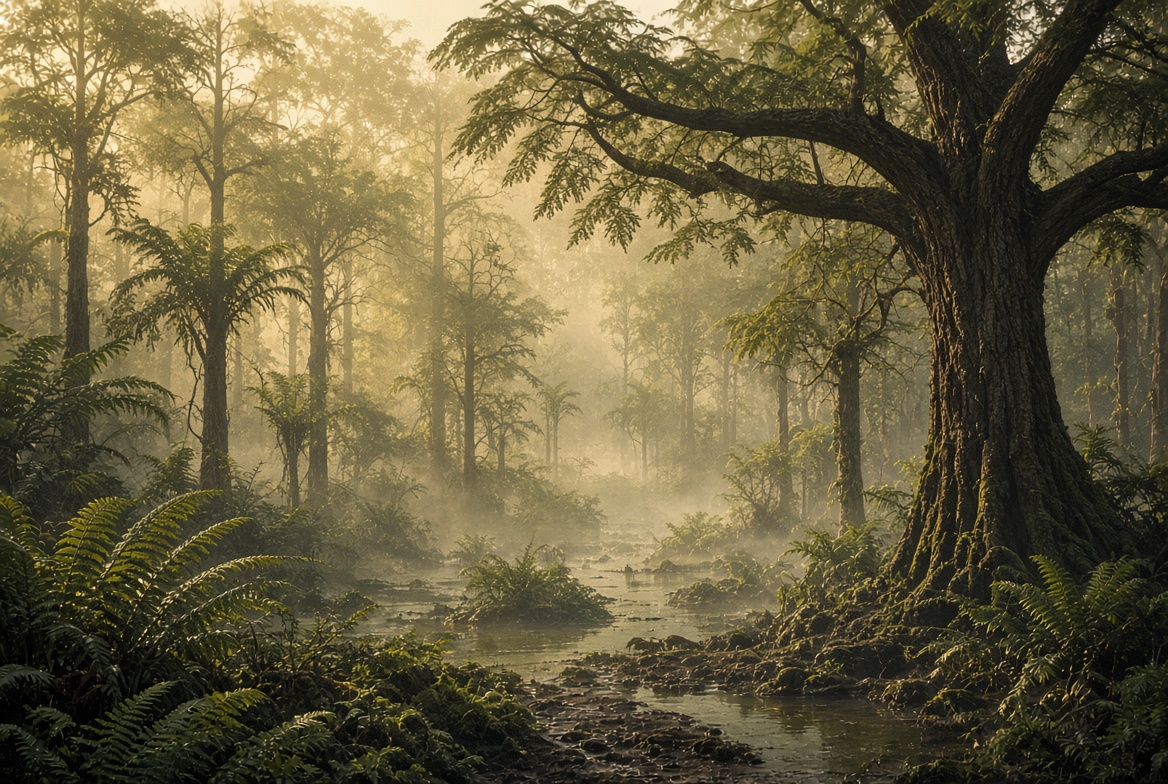
Origins
From green algae and moss-like pioneers to wood, roots, and the first trees. Why height won, and how forests cooled the world.
Read the origins →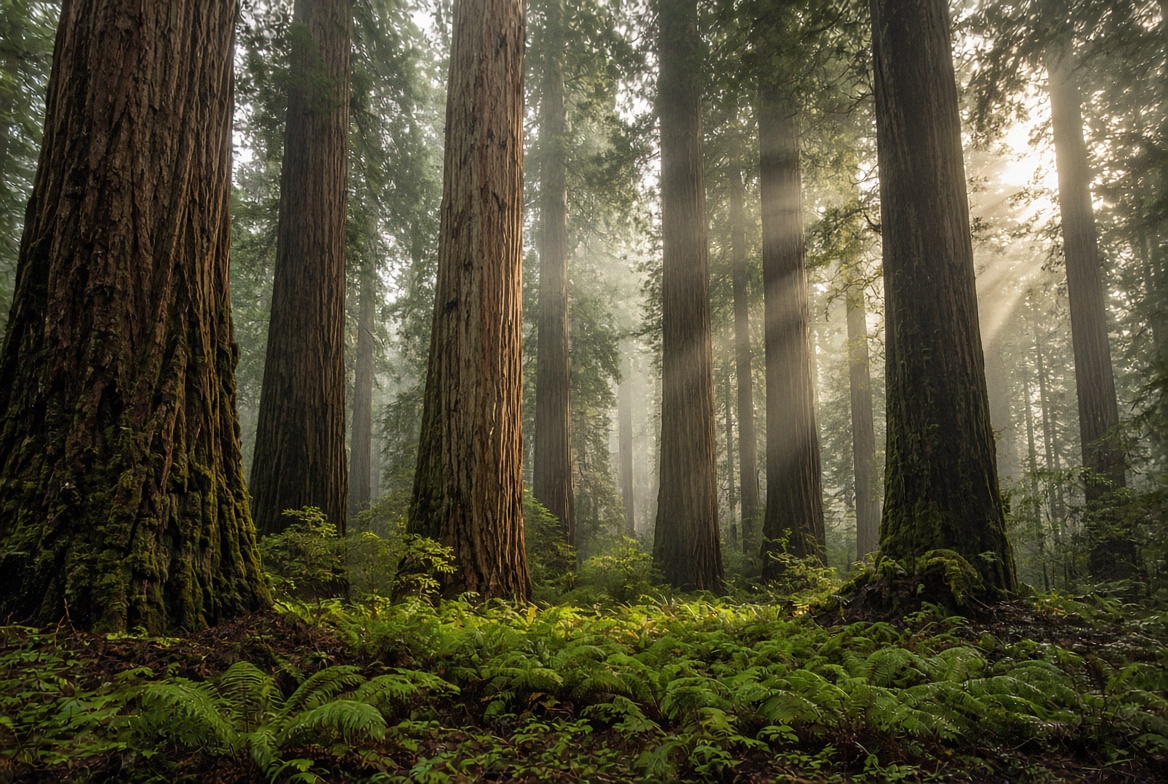
A history written in wood
Long before cities, writing, or even flowers, trees remade the planet. This site follows that story from the first woody trunks of the Devonian to the living giants and threatened forests of our own century.
A tree is not a single invention. Height, wood, roots, leaves, seeds, and flowers arrived in pieces, over tens of millions of years, as plants learned to live on land that had once been bare rock and microbial crust.
The earliest land plants were tiny, spore-bearing, and close to the ground. By about 390–385 million years ago, in the Devonian period, some of their descendants had become something we would recognize as trees: plants with woody tissues that thickened a trunk year after year, deep roots that broke stone into soil, and canopies that cast the first true forest shade.
Those first forests changed the atmosphere, the climate, the rivers, and the opportunities available to animals. Much later, they became the raw material of human civilization—fuel, timber, ships, paper, sacred groves, and the backdrop of almost every culture on Earth.
This site is a guided walk through that history: how trees evolved, how forests rose and fell across geologic time, how people used and abused them, and which individual trees still carry centuries—or millennia—in their rings.
The first forests were unlike anything living today: spore trees with fern-like fronds, vast root systems, and no flowers at all.
Land plants leave the first clear fossil traces as resistant spores.
The oldest mapped forests appear, with wood, roots, and a shaded understory.
Age of Methuselah, a Great Basin bristlecone pine in California’s White Mountains.
Share of habitable-land forest cleared by people since the last ice age.
Each page stands alone, but the story is easier if you read them in order.
From green algae and moss-like pioneers to wood, roots, and the first trees. Why height won, and how forests cooled the world.
Read the origins →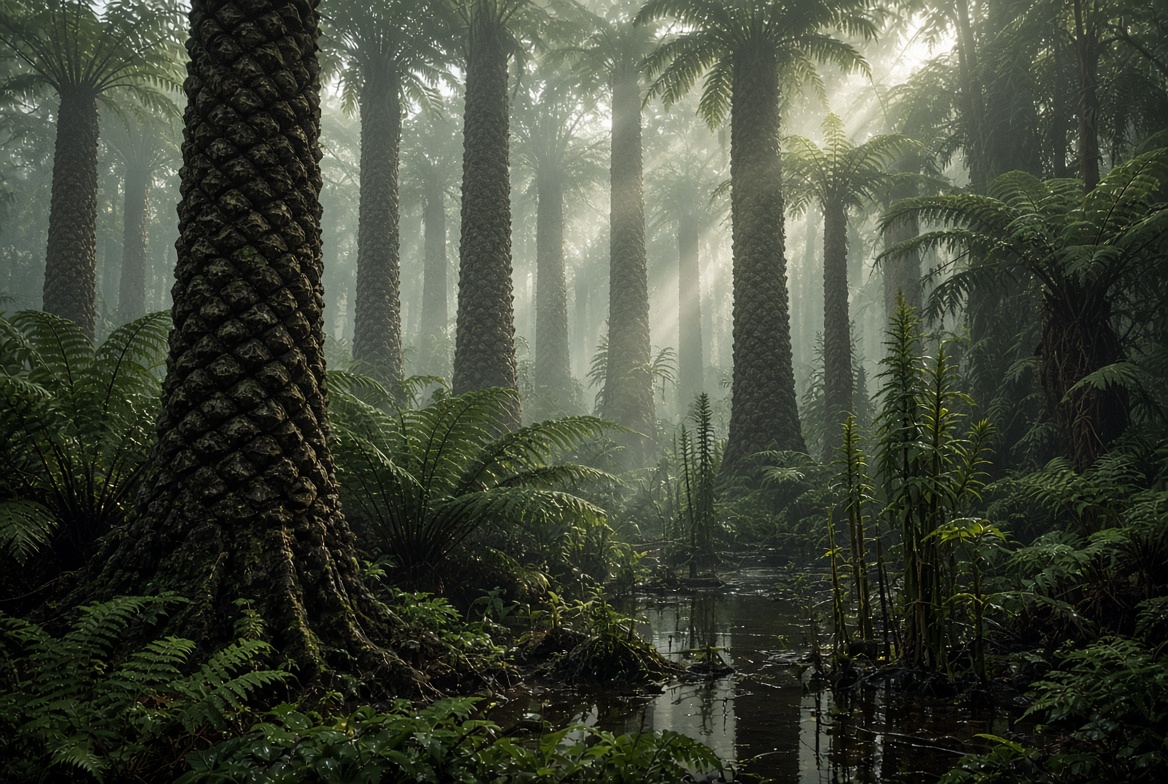
Coal swamps, the rise of seed plants, ginkgos and conifers, then the flowering trees that still dominate most forests.
Walk through the ages →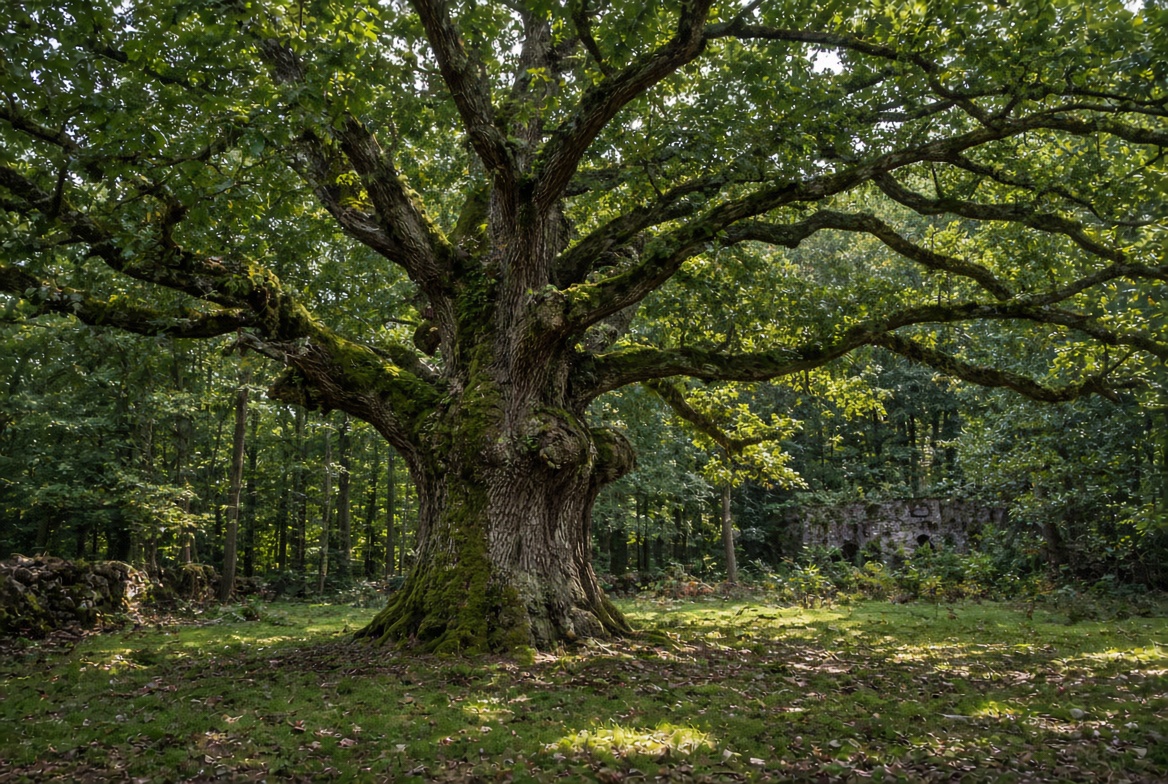
The Wood Age that built temples, fleets, and empires—and the long campaign of clearing that followed agriculture.
See trees and people →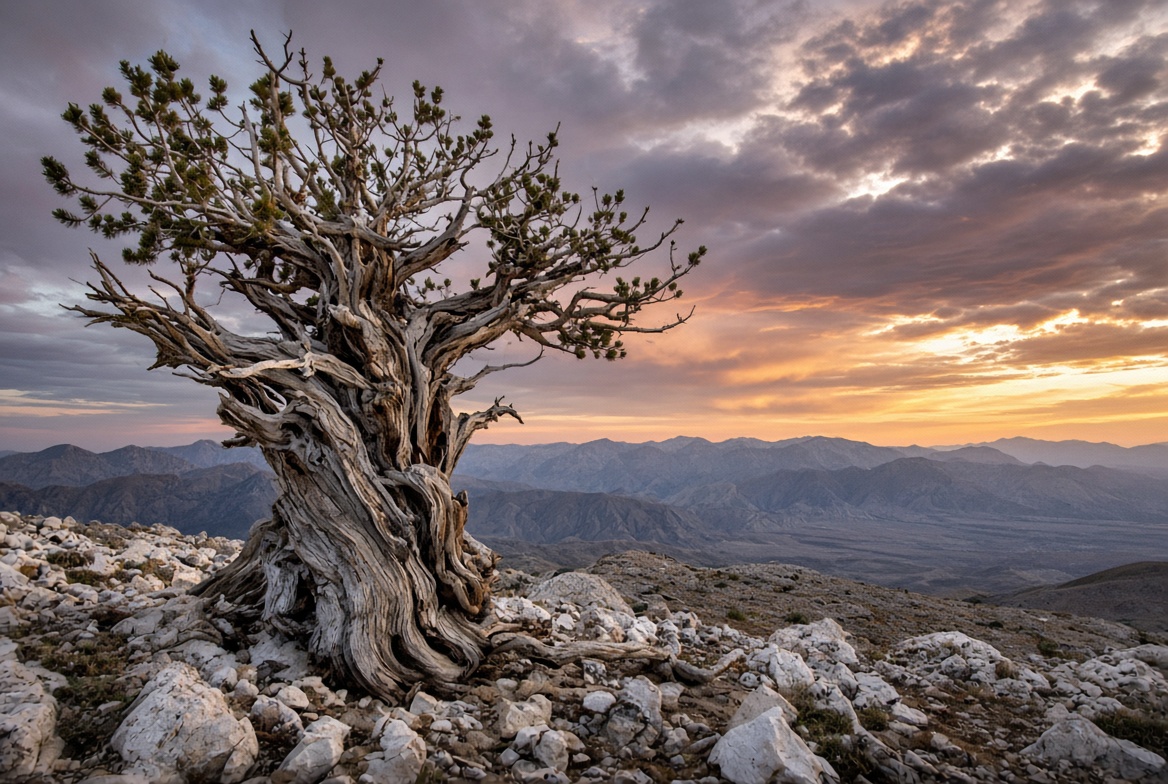
The oldest and largest trees alive, what we have already lost, and how some countries have reversed deforestation.
Meet the survivors →“Trees have been the principal fuel and building material of every society over the millennia… Without vast supplies of wood from forests, the great civilizations of the world would have never emerged.”
— A theme of John Perlin’s Forest Journey, echoed across archaeology and history
What follows is not a catalogue of species. It is a history of a form of life that learned to stand up, stay put for centuries, and quietly rearrange the chemistry of a planet. Trees are both relics and contemporaries: a ginkgo leaf is a design that has barely changed since the dinosaurs, while a city plane tree is a partner in the most recent chapter of the same story.